Thursday 14 May 2026
Pedestrian Battery-Powered Mowers vs Pedestrian Petrol Mowers: Which is the right choice for your groundskeeping needs?
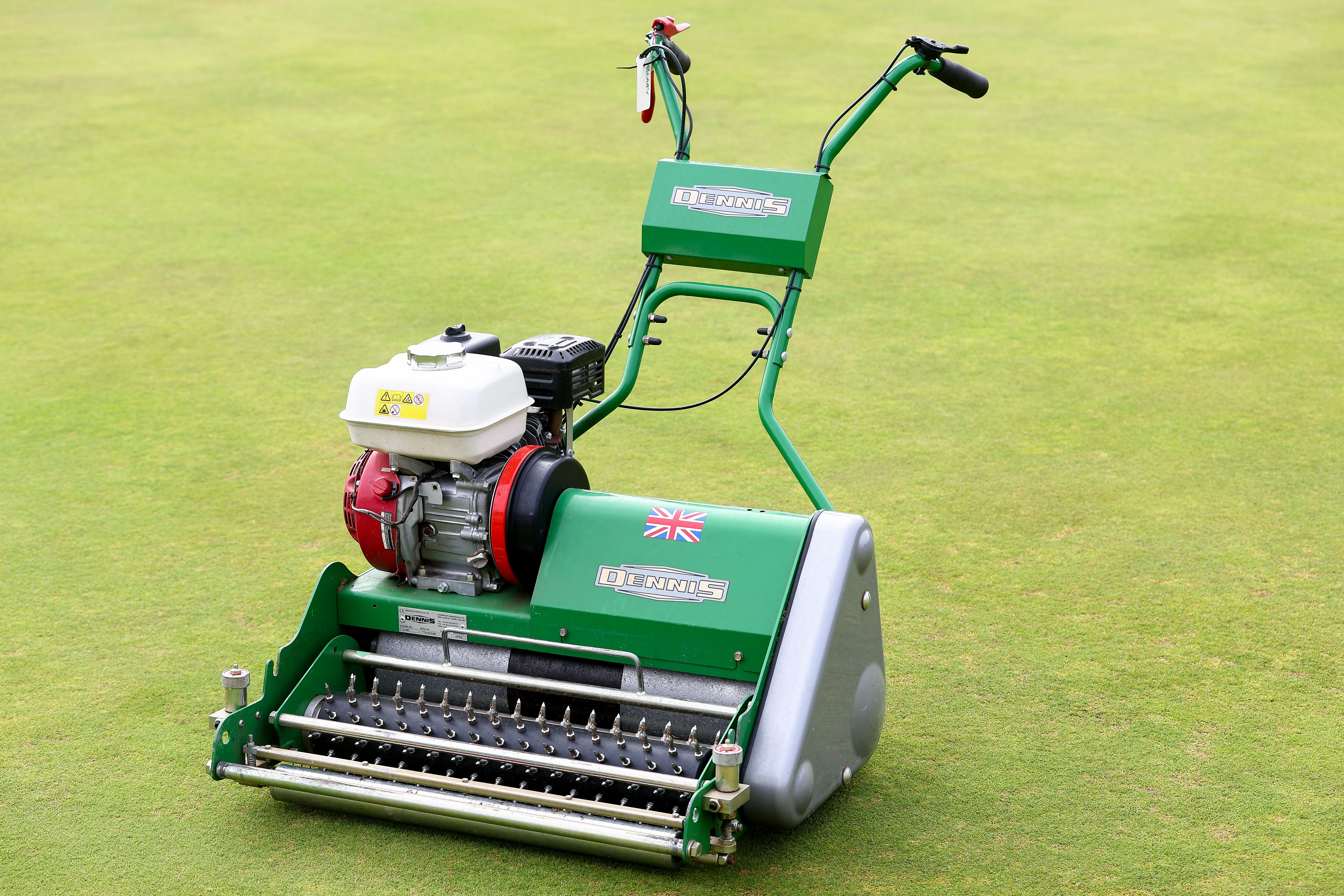
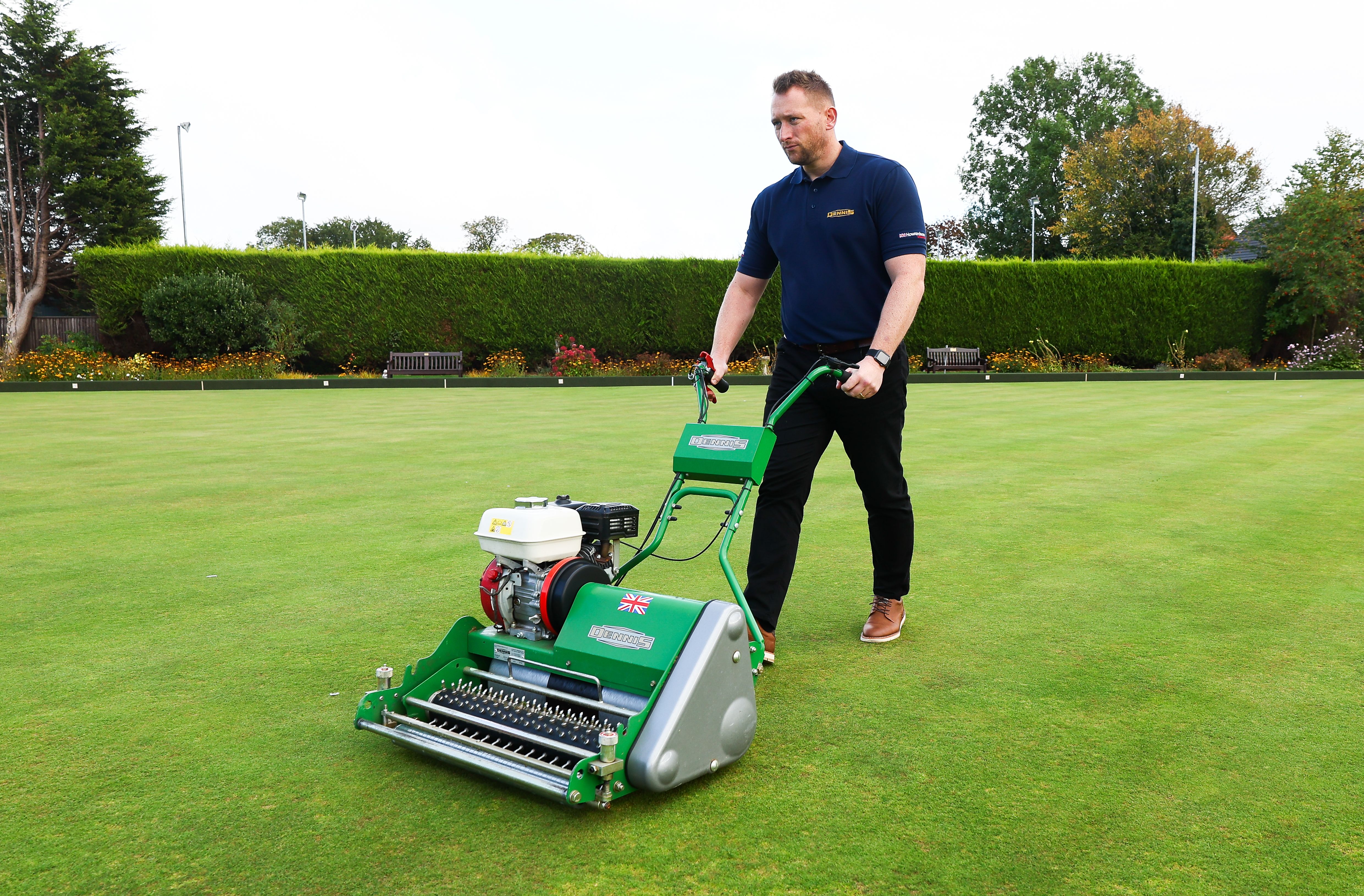
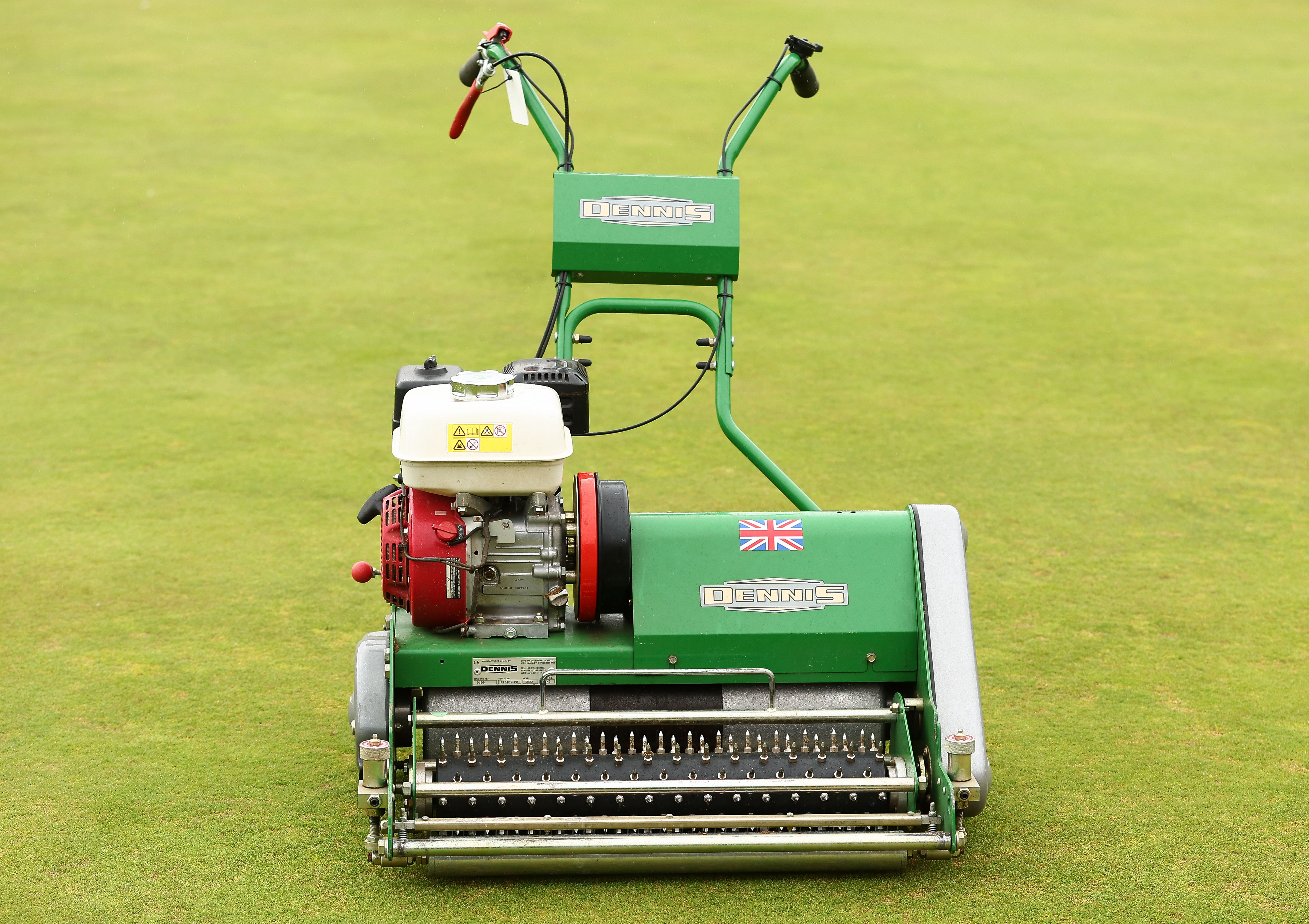
For professional groundskeepers, pedestrian petrol mowers have been the primary choice for over 100 years, following the introduction of the first system in the early 20th century. Since then, the technology has come on leaps and bounds, with today’s models offering power, versatility, and efficiency to users in equal measure.
While the popularity of the petrol mower cannot be disputed, the rapid rise of battery-powered mowers as the new machine of choice for many grounds maintenance applications is significant. Indeed, as emissions targets become ever-more important aspects for grounds people across the UK, the transition towards battery alternatives is hardly surprising.
With pedestrian petrol and battery-powered mowers evidently both popular choices in their own ways, it’s time to take a side-by-side comparison of the two. Taking their key features into account to help professional groundskeepers to more easily determine which commercial mower is the right one for their purposes.
The Question of Cost
For many groundskeepers, the choice between battery or petrol mowers is viewed simply on the basis of price. As petrol machines tend to come with a smaller up-front cost than their battery counterparts, this might make the decision an easy one for some. However, the long-term savings generated by a professional battery mower can make the initial investment cost more than worth it.
After all, a full recharge for a 5.76 kWh battery-powered mower is a mere £1.42, representing a 9-fold saving on the petrol that would be used to complete the same task*. Thanks to their low maintenance requirements and low running costs, the whole life cost of these systems means they pay for themselves many times over before the time comes for them to be replaced.
Green Credentials
Many grounds maintenance professionals are opting to invest in a pedestrian battery-powered mower due to the sustainability benefits that they can bring.
The combustion of the fuel in petrol releases carbon dioxide, carbon monoxide, NOx, and other pollutants into the atmosphere, all of which can have an impact on the environment.
Meanwhile, the ability of a battery-powered mower to deliver the same exceptional finish and cutting performance as a traditional petrol mower is just one reason why sustainability-focused grounds people are now turning to this technology. The lithium-ion batteries used in these systems produce no emissions when in operation, making them a shrewd choice for those keen to reduce the carbon footprint involved in grounds maintenance.
While the operation of battery-powered mowers brings considerable emissions benefits, it is important to note that lithium mining is currently an energy-intensive process. However, all future developments will be focused on making the mining involved in the manufacture of electric mowers more environmentally friendly, raising electricity production from renewables, and increasing the use of lithium-ion recycling, paving the way for a greener ecosystem in the long run.
The Fitness Test
When it comes to performance, pedestrian petrol mowers have traditionally provided lengthy continuous operation, with the ability to cover large areas without the need for regular refuelling. What’s more, when the time does come to refuel, this process is quicker than recharging a battery mower, though fuel collection, storage and deterioration need to be taken into consideration.
With high-capacity batteries able to cut multiple pitches on a single charge, however, topping up charge can be carried out over lunchtime with simple plug-and-play and a full recharge completed overnight, making range anxiety a thing of the past with the right mower selection.
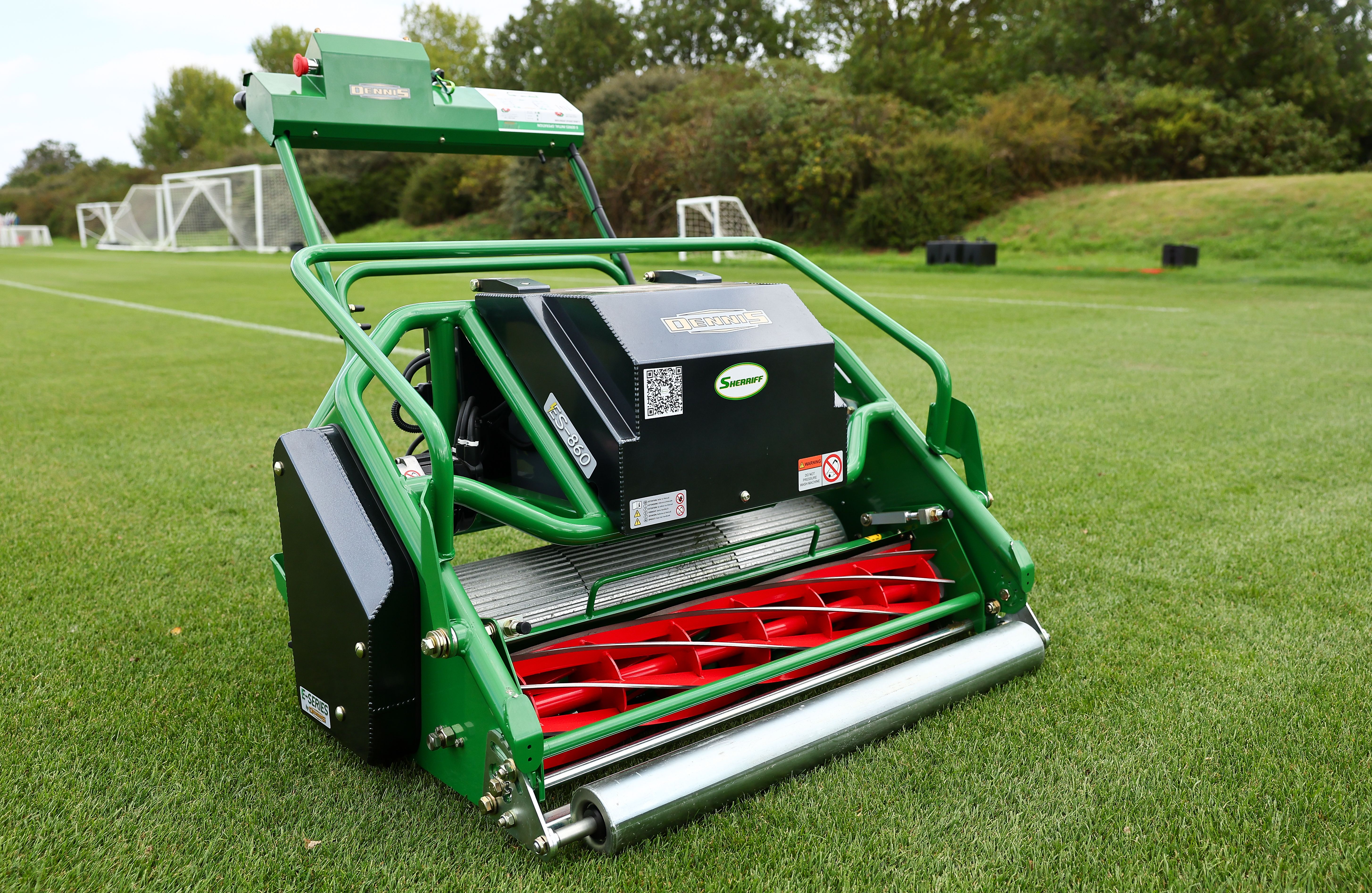
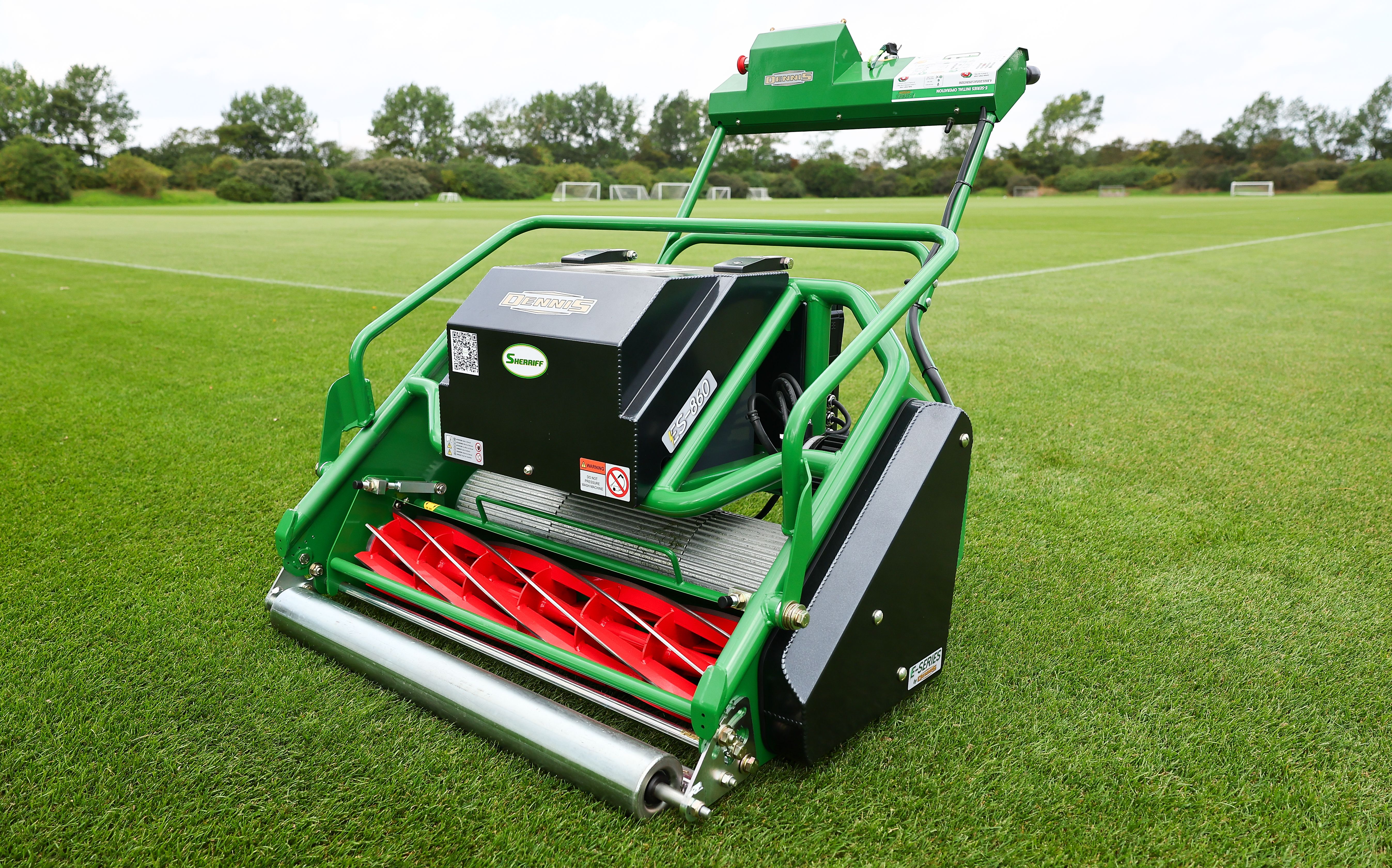
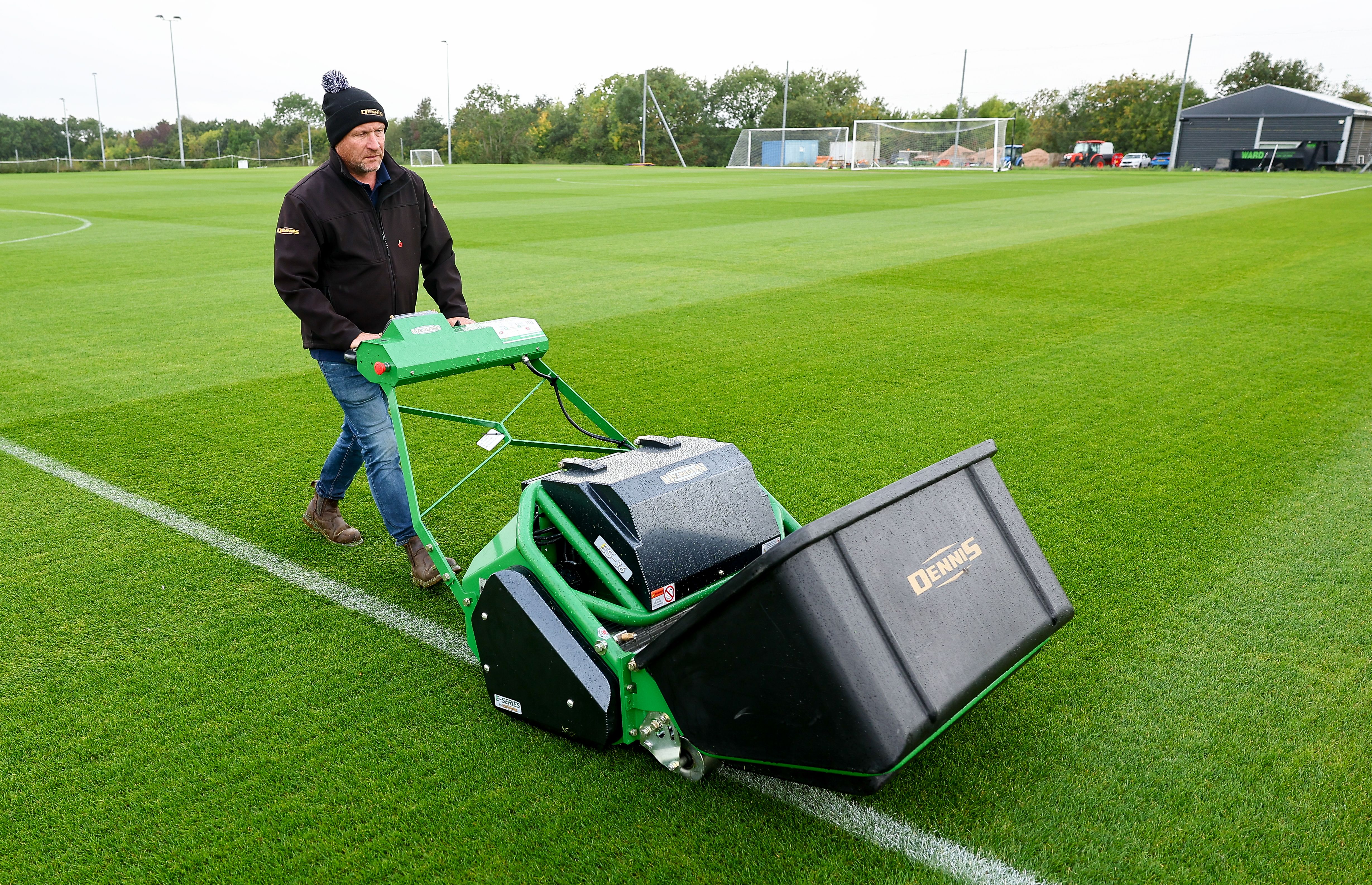
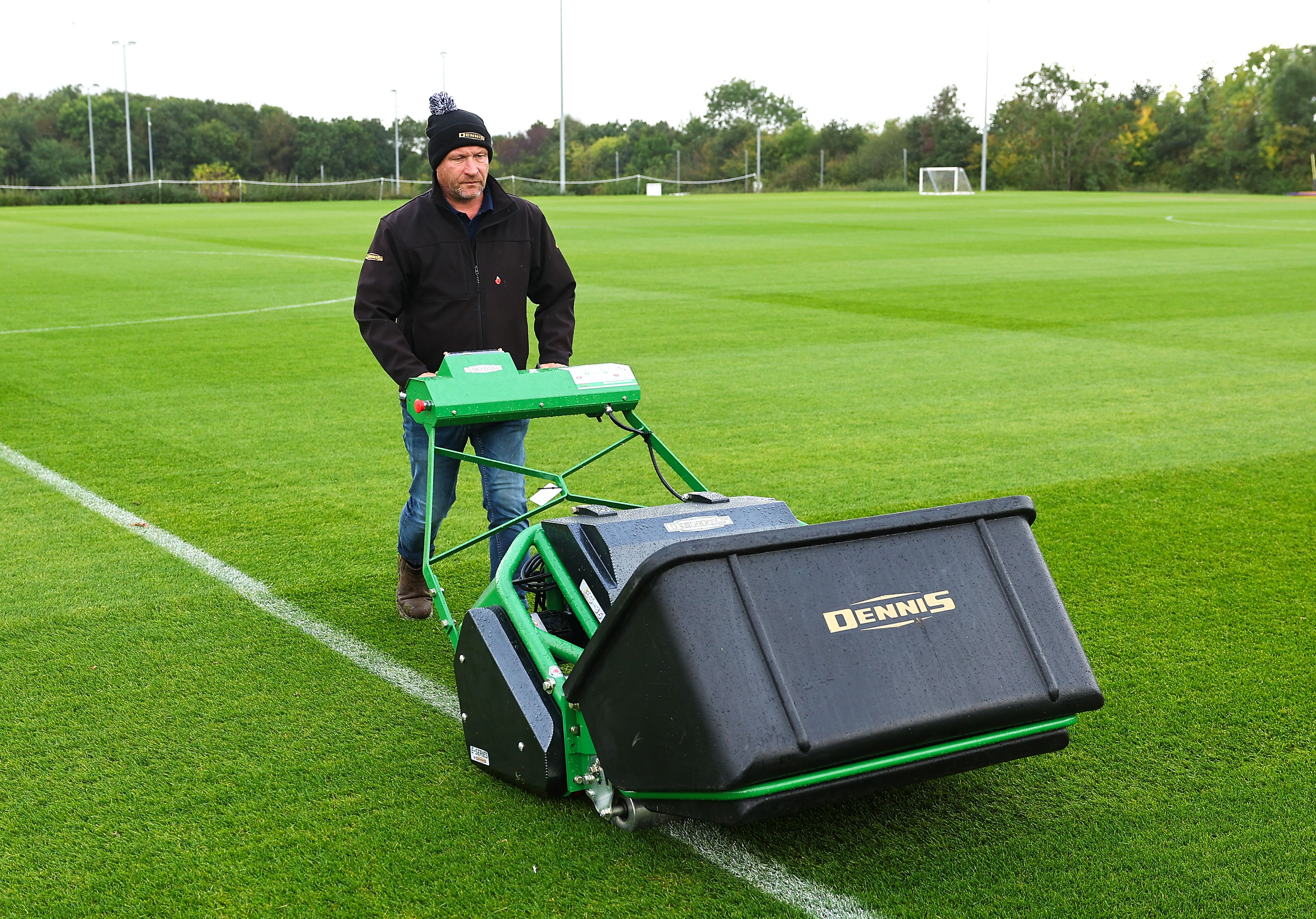
The Dennis ES-860 and ES-36 are capable of cutting up to three or four full-sized pitches on a single charge, or up to 20 km with a trailer seat attached, with the weatherproof LCD display clearly showing the battery level at all times. In the event that a battery-powered mower is nearing depletion and needs charging, they can be fully recharged in as little as two hours.
Additionally, up to eight mowers can be recharged sequentially through the use of a Multi Charger Hub. As such, planning schedules around the battery life of a machine become easier to manage for grounds professionals.
Setting height of cut on battery mowers, meanwhile, avoids petrol related issues, such as petrol leakage and impact on grass health.
What’s more, battery-powered mowers also offer a significant reduction in noise compared to their petrol counterparts. The wider benefit in turn is grass maintenance can then take place during and in close proximity to sports practice, for example, with minimal disturbance. Not only does this limit the noise pollution created by mowing; it also brings health benefits for operators through lower noise levels and reduced hand-arm vibration (HAV), thereby lessening the risk of conditions such as tinnitus and vibration white finger syndrome.
Dennis battery mowers also provide the added benefit of letting operators set specific ground speeds, with slow take-up speeds allowing for a smooth set off. Users can also set and maintain clips per metre at any forward speed through self-adjusting cylinder RPM, and view hours of operation or distance covered, while a backlapping feature is built into the controls as standard.
Maintenance Matters
For the busy grounds person, the level of maintenance that their pedestrian mower requires is another key consideration. Petrol mowers are subject to regular oil changes, waste oil storage and disposal, spark plug replacements, and carburettor cleaning to ensure that they remain in tip-top condition. In neglecting to carry out this maintenance work, operators run the risk of poor performance or even engine failure.
Battery models meanwhile, have much lower maintenance requirements, with users effectively only having to ensure that the battery is kept charged to tackle the task at hand and that the mower is cleaned periodically, belts are maintained and machine parts are greased. Therefore, the use of a battery machine can not only substantially reduce the amount of time for maintenance, costs are also significantly lower.
The Electric Revolution
With their powerful performance, long run times and familiarity, it is not surprising that traditional pedestrian petrol mowers have stayed such a constant in grounds maintenance over the decades. However, it’s clear that a quiet revolution of battery-powered machines is taking place across the industry, driven by low maintenance and cost of operation, ample range, and operational flexibility of these machines
While there are sometimes good reasons for staying with a petrol mower, there are many reasons for professional grounds people to evaluate battery mowers, and many new benefits to be gained from taking the long-term decision on where to invest when purchasing their next mower.
Find out more about the Dennis E-series.
Further information on the Dennis FT Range is available here.
*As of 1st April 2026