Port Vale Grounds Team Invest in Dennis Battery Technology as Club Enters 150th Year
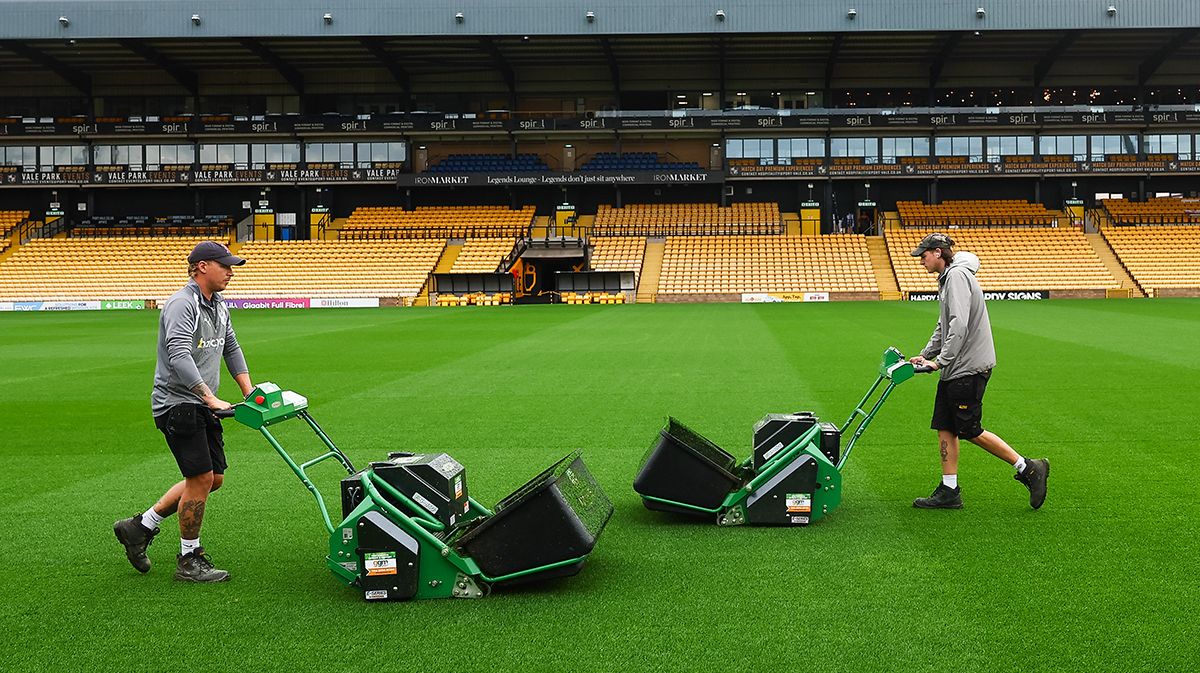
Port Vale Football Club's Head of Grounds, Steven Alderson, has turned to Dennis battery-powered mowing technology as the club continues a major period of development during its 150th year.
Steven has been responsible for the club’s grounds operation for the past four years, having built up his career across both professional golf and football.
“I’ve had nine years experience in golf before moving to Birmingham City’s training ground, then Wolverhampton Wanderers, and now here at Port Vale,” said Steven.
His role at Port Vale encompasses a demanding portfolio of playing surfaces across the club’s stadium and training ground, as well as additional sites.
“There’s four of us that work over the training ground and stadium. We also have sites at Bradley, which is down the road, and Sproson Park, which is in development, so we’re fairly busy.”
The workload has increased further during what has been a particularly busy summer for the club.
Port Vale is currently celebrating its 150th year, while also looking to bounce back following relegation to League Two last season. Alongside preparations for the new campaign, significant work has been undertaken across the club’s playing surfaces.
“We’ve had a busy summer. We’ve had the training ground and stadium reconstructed by SGL/SIS pitches. At the back is two fibre-sand pitches and then in here is a SIS stitched pitch. The players are noticing a massive difference from the soil-based pitches we had before where we had games called off regularly.”
With the new surfaces in place, the grounds team has also been able to review its approach to mowing, including increasing the amount of hand mowing carried out across the stadium and training ground.
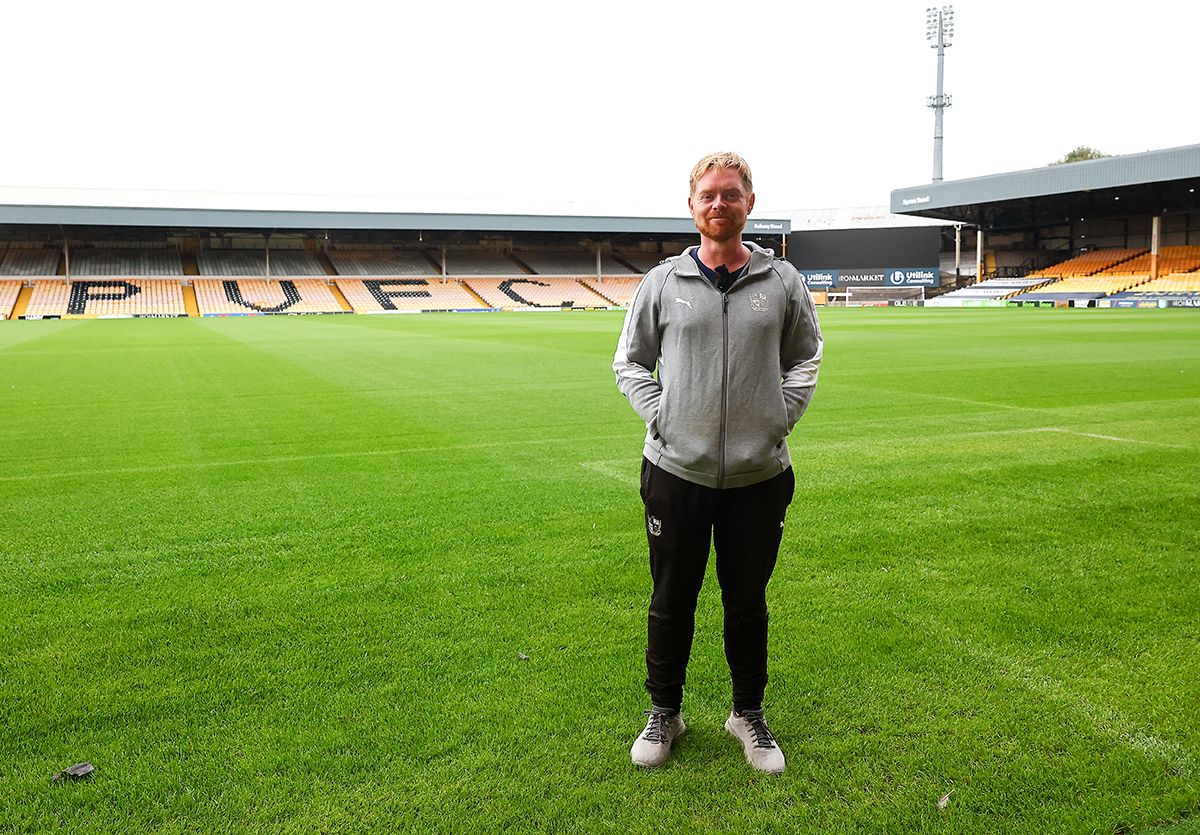
A straightforward choice for Steven
For Steven upgrading to new Dennis battery-powered ES-860 cylinder and ES-34R rotary mowers was a natural decision, having previously used Dennis machines throughout his career.
“For me, it’s pretty straightforward. I had Dennis at Birmingham City and Wolves and, even coming in here, we had a couple of older models. They never let me down. They’re a reliable mower. So when we were upgrading again coming into this year with new mowers, it was a straightforward choice for me.”
The Port Vale grounds team has introduced Dennis ES-Series battery-powered cylinder and rotary mowers as part of the latest fleet upgrade, combining the proven cutting performance associated with Dennis with the benefits of battery-powered operation.
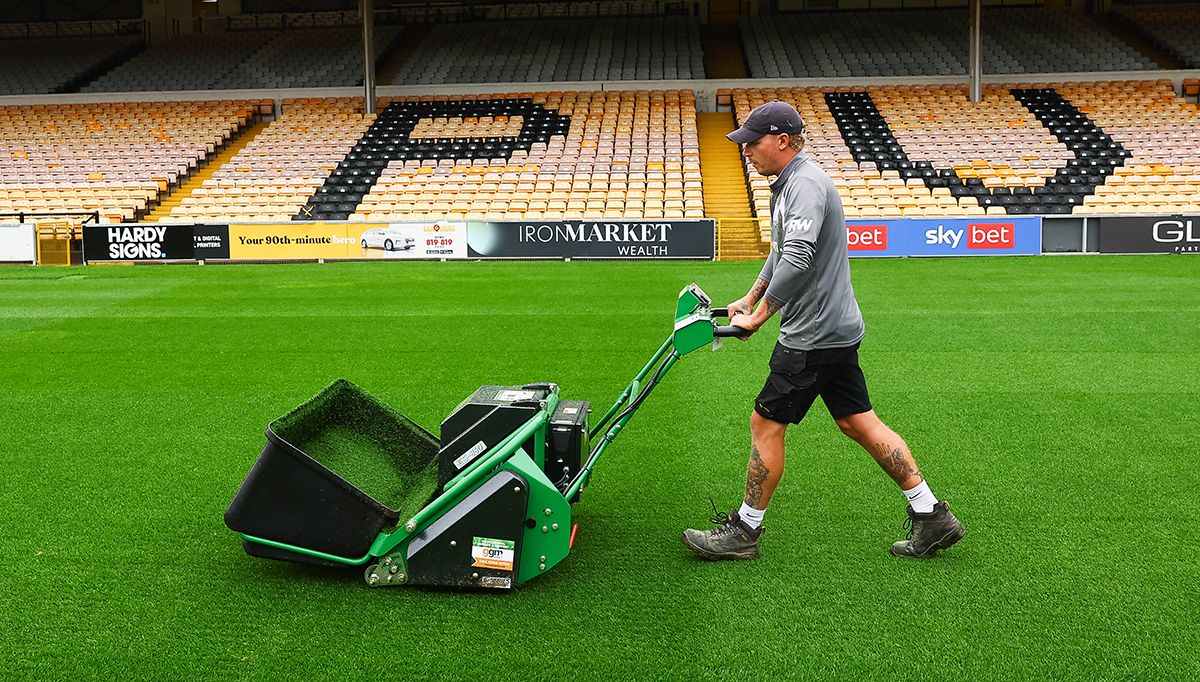
Sustainability and battery performance
Sustainability was an important consideration when the club began looking at its new mowing equipment.
“With the upgrading of the mowers, we went for a sustainability aspect and our club owners were keen to support that,” explained Steven.
“We looked at the battery life of the new mowers and, with the new reconstructions, wanted to hand mow more.”
The battery performance has already proved particularly valuable for a grounds team responsible for several pitches.
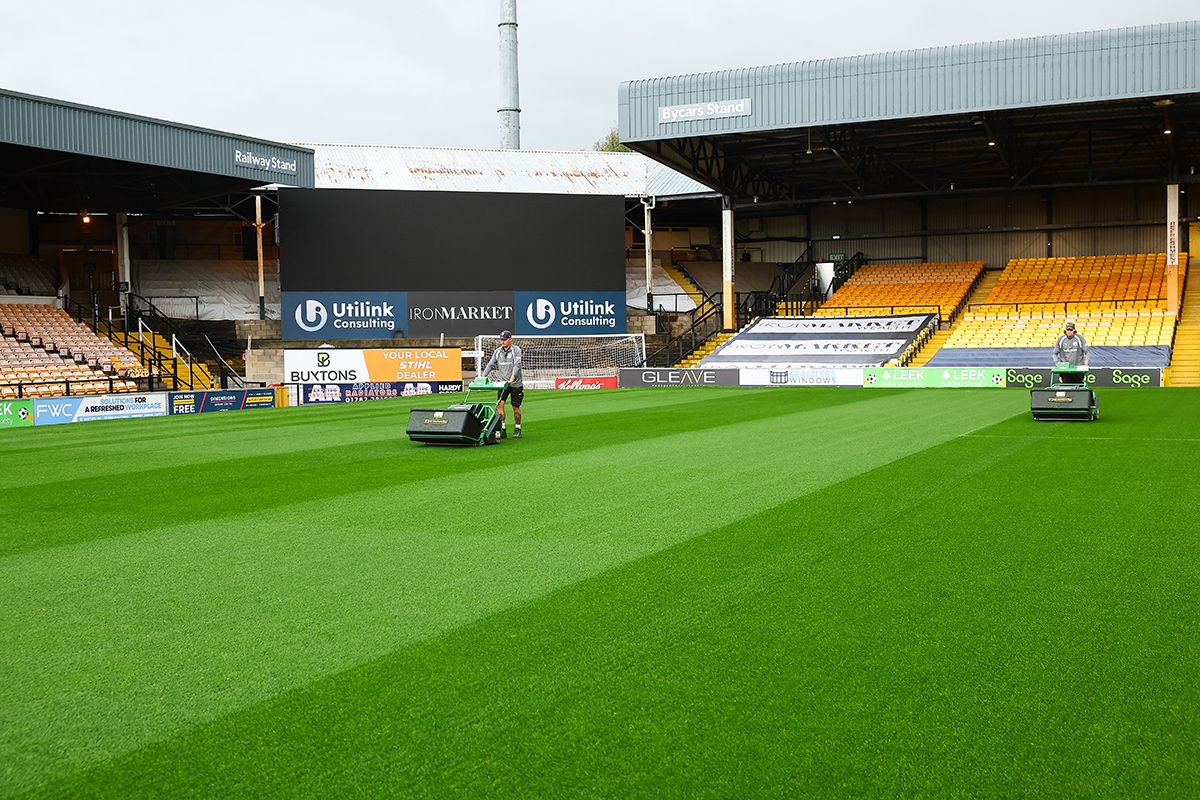
“We can mow the training ground and stadium in the morning and still end up with 60% left after three pitches mown. So there’s a big benefit for us.”
The team has also been able to use the machines immediately after matches to help return the pitch to the required standard.
“And then same with the rotary mowers, the tidy-up job, especially at the end of the game, that we can get straight onto the pitch and clear it up has been a big benefit for us already.”
Quieter operation brings matchday benefits
One of the most immediately noticeable differences between the electric machines and the club’s previous petrol-powered equipment is the reduction in noise.
“There’s less noise with the electrics, which has been a massive benefit for us, both from a health and safety aspect but also on a matchday.”
The quieter operation is particularly useful when the grounds team needs to work while other matchday activities are taking place.
“Phil from BBC Radio Stoke always jokes about the mowers coming out straight behind while he’s trying to record his post match interviews. So now we can do that with great ease and no disturbance to anyone else.”
The move to electric was also influenced by considerations around vibration and the age of the club’s existing petrol machines.
“Last year, we started looking at the vibrations, as well as the health and safety implications. With the mowers also getting a little older, those were the main reasons we decided to switch to electric.”
Steven also sees the transition as part of the wider move towards more sustainable equipment.
“As you could well imagine, that’s the way the world’s moving now. Theres no fumes, no having to buy or use petrol. So it’s been brilliant for us.”
Simple adjustment and excellent cut quality
The new machines have also made the everyday process of setting up and operating the mowers easier for the grounds team.
“With the older models, we had just a case of putting the setting bars in ready whereas now we’ve got the quick click adjusters, so it’s a lot easier to set the mower height without tools.
“Also with the speed, we can adjust it to the person and adjust the clip rate accordingly.”
Despite the move to battery power, Steven says the most important consideration remains the quality of the finished surface.
“As always, I’ve said before, everywhere that I’ve been, the quality of the cut has been excellent with Dennis. They’re easy to set, which is a massive key, and easy to backlap in-house.
Battery life exceeding expectations
Battery performance was naturally one of the key considerations when the club was assessing the move away from petrol machinery.
However, the experience so far has been extremely positive.
“We can manage to mow three pitches and still have battery left to potentially do another one,” said Steven.
“Ironically, we’ve been having to fill up the petrol mowers before we’ve had to look at recharging the mowers.
The machines have also demonstrated their ability to handle the club’s stadium pitch, with the team able to complete multiple cuts of the full playing surface.
“This is on their third cut now on the stadium, and we have a full hectare to mow in grass and it’s done it no problem. Three cuts.”
No compromise on manoeuvrability
One concern the team had when moving to battery-powered machines was whether their additional weight would make them more difficult to manoeuvre.
“One of the issues we worried about when we were buying them was whether, with them being slightly heavier, they’d be harder to turn at the end of the pitch,” Stephen explained.
Port Vale’s pitch has a short run-off area at either end, meaning the grounds team has less space in which to turn the machines.
“We’ve noticed it’s no difference to the petrol ones. It’s still an easy turn at the end.”
For a grounds team working across multiple high-quality playing surfaces, that combination of performance, usability and reliability has made the transition straightforward.
And for Steven, the experience has confirmed that battery-powered mowing has a place within the modern professional sports turf environment.
“Absolutely. If the opportunity is there, I would definitely recommend swapping to electric mowers- we wouldn’t go back.”