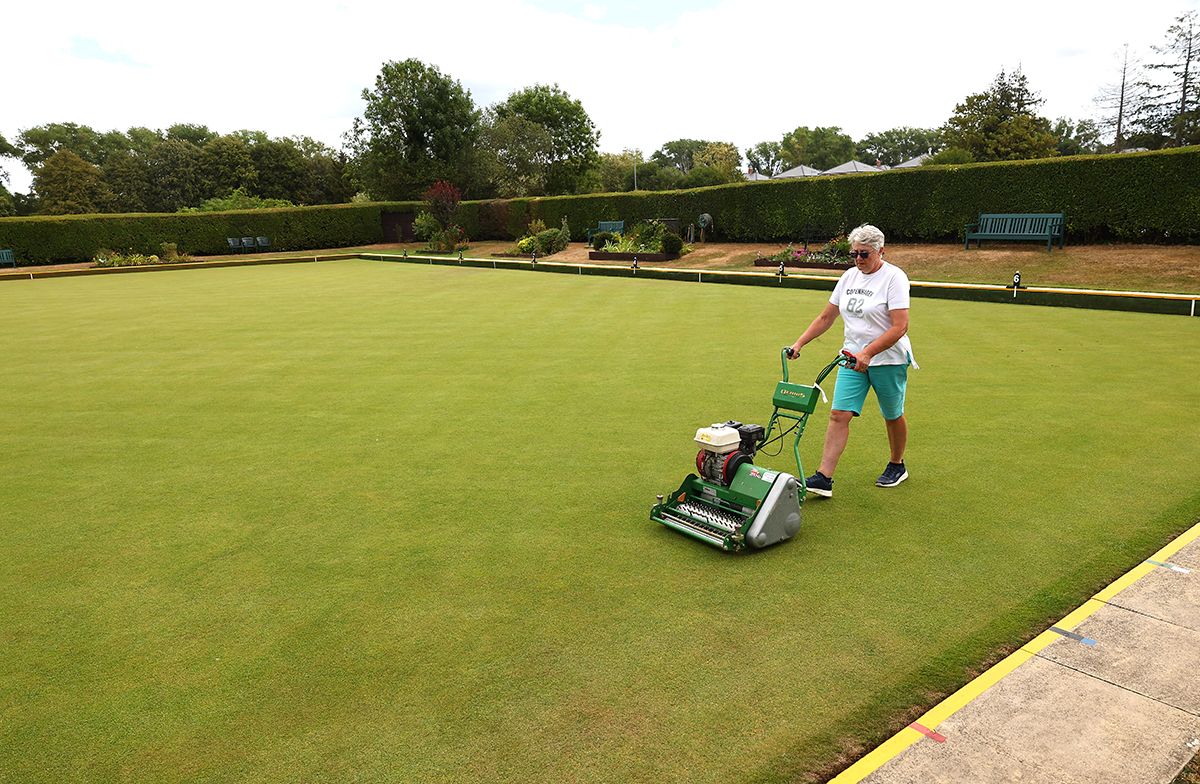
Bowls England Interview - Behind the Green: Meet Sue Allen, Green Team Lead at Harperbury Bowls Club
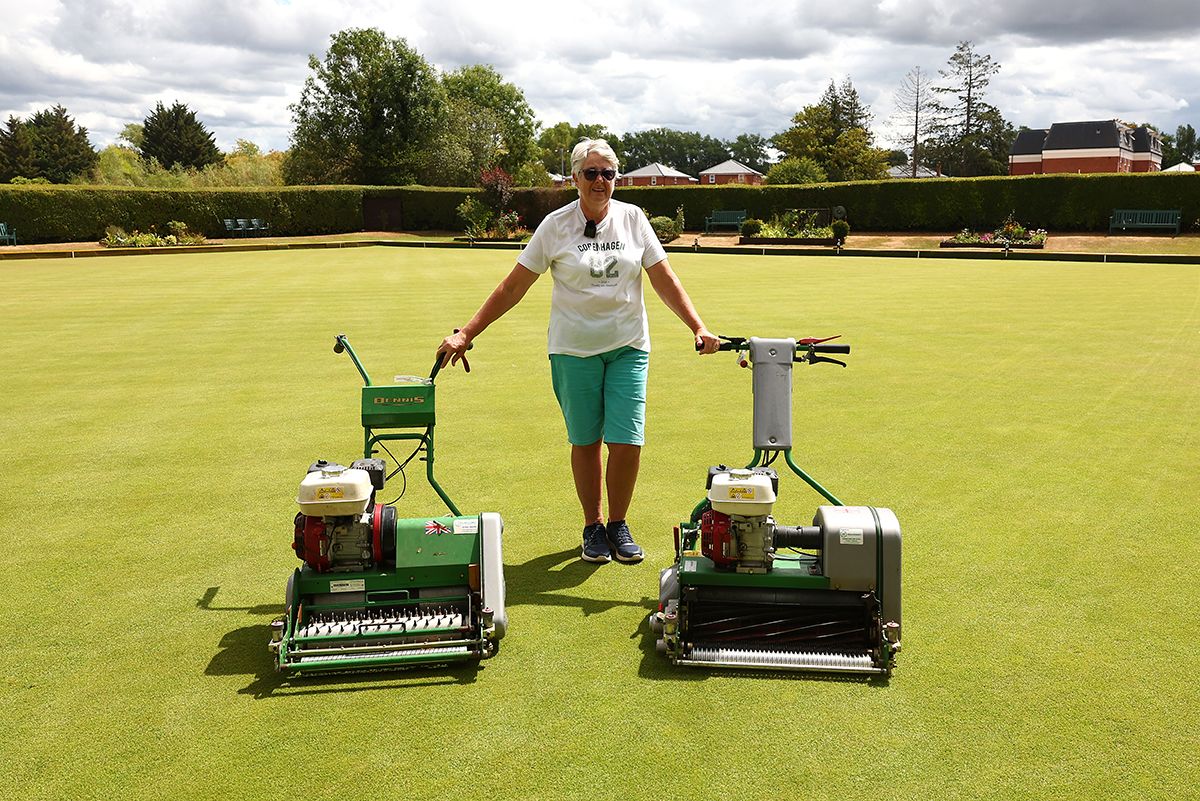
A passion for the outdoors, a dedicated team and the right machinery are all part of keeping a bowling green in top condition. We caught up with Sue Allen, Green Team Lead at Harperbury Bowls Club, to find out what goes into maintaining their green, why volunteering is so rewarding and how Dennis machinery plays an important role in their work.
A Club with History and Community at Its Heart
Founded in 1955 as Harperbury Hospital Bowls Club, Harperbury Bowls Club has a history that stretches back more than 70 years. The club was originally based within the grounds of Harperbury Hospital, formerly a mental health hospital near St Albans.
Following the hospital's closure, the NHS remained the club's landlord, meaning the original name was retained for some time. Once the ownership arrangements changed, the word "Hospital" was dropped, and Harperbury Bowls Club became the club we know today.
Today, the club has approximately 120 members, around 80 of whom are active bowlers, with the remainder enjoying associate membership, including spouses and partners of playing members.
Behind the club's excellent playing facilities is a dedicated team of volunteers who work throughout the year to keep the bowling green in the best possible condition.
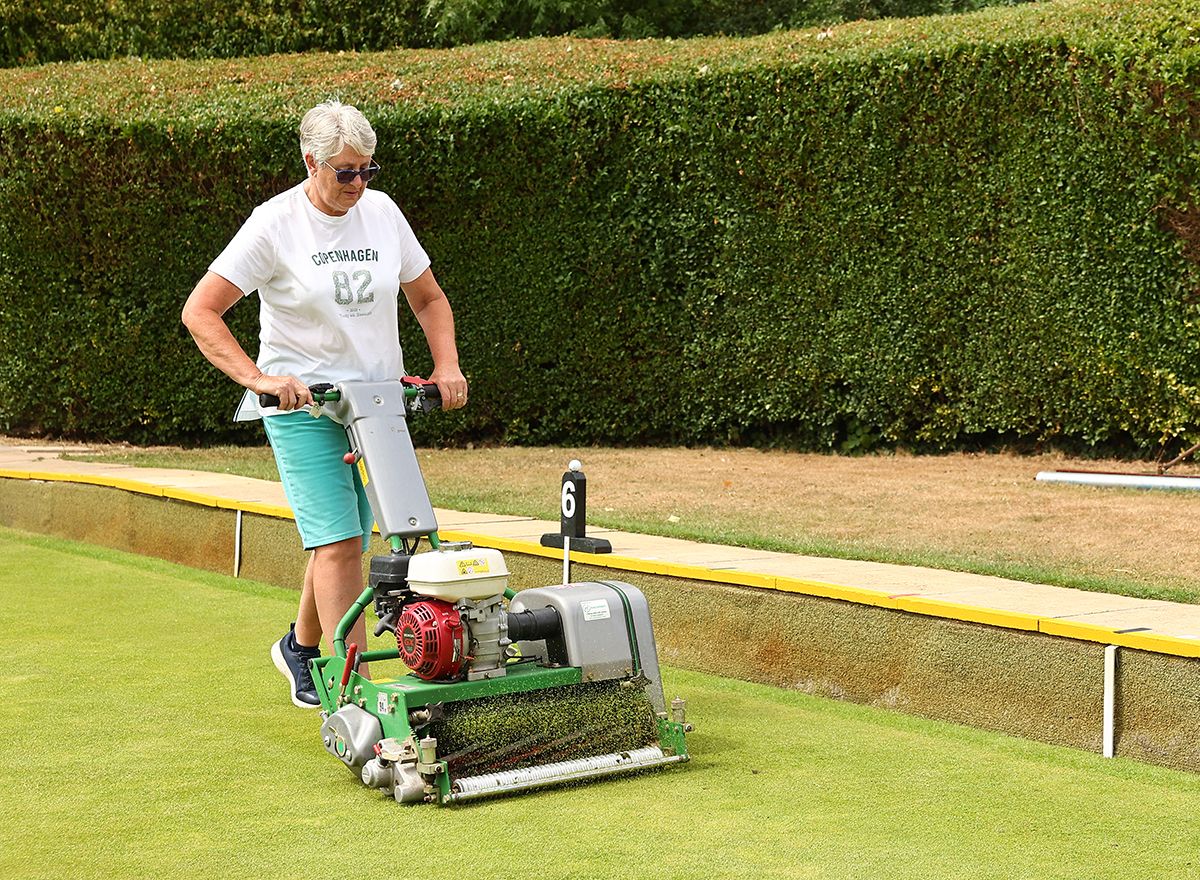
Meet Sue Allen – Green Team Lead
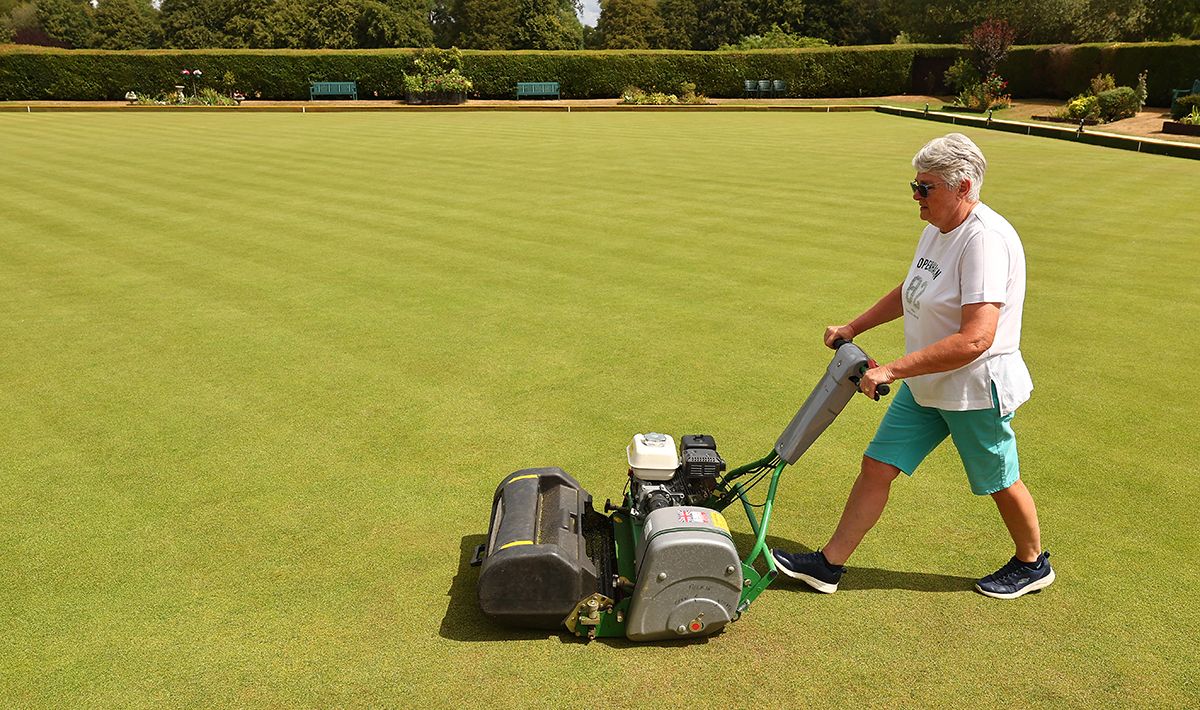
Sue Allen leads Harperbury's six-strong volunteer Green Team, coordinating the maintenance of the bowling green and carrying out much of the practical work herself.
Her responsibilities include overseeing fertiliser and nutrient applications, organising maintenance schedules and ensuring the green remains in excellent playing condition.
The team undertakes a wide range of maintenance activities, including mowing, aeration, scarifying, verticutting, nutrient applications, weed management and general greenkeeping. Specialist machinery is used to carry out these tasks, while other club volunteers also help maintain the flower borders and surrounding areas, ensuring the whole club environment looks welcoming.
For Sue, however, greenkeeping is about much more than simply maintaining the grass.
Why Volunteer?
When asked what she enjoys most about volunteering, Sue's answer is simple: seeing the results of the team's hard work.
"There is enormous satisfaction in standing back and seeing what the team has achieved. It is especially rewarding when visiting clubs tell us ours is the best green they have played on during the season. Hearing that feedback makes all the hard work worthwhile."
The current Green Team has been looking after the green for around eight or nine years. They took over before COVID from a gentleman who had done a fantastic job maintaining the surface.
Their aim from the beginning has been to continue the high standards he established.
Over the years, the team has developed excellent camaraderie, with everyone supporting one another and working towards the same goal.
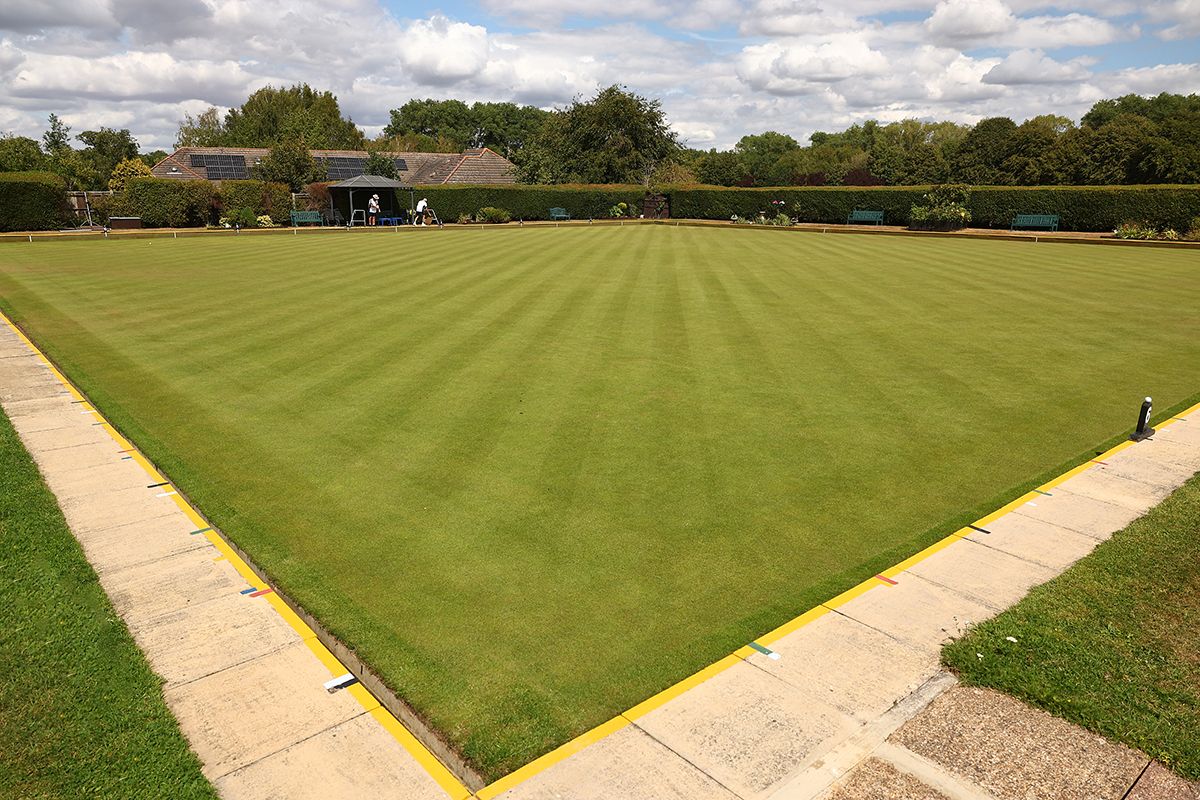
Greenkeeping, Mental Health and Wellbeing
Spending time outdoors has always been something Sue has enjoyed, making greenkeeping a natural fit.
"Working outdoors has always suited me because I've always enjoyed being outside. Spending time in a beautiful environment and working alongside a great team is hugely rewarding. Greenkeeping provides exercise, purpose and friendship, all of which contribute to positive wellbeing."
Volunteering offers a valuable opportunity to stay physically active, spend time outdoors and become more connected with the club community.
Sue is also keen to encourage more people to get involved, particularly those who may not have considered greenkeeping before.
"If you enjoy working outdoors, want to stay active and would like to become more involved in your bowls club, I would encourage you to give greenkeeping a try.
"You do not have to be male to carry out green maintenance. With a supportive team behind you, there is nothing to stop anyone taking on the role. Volunteering benefits both your physical fitness and your mental wellbeing."
Women in Greenkeeping – Challenging Perceptions
As a woman leading a greenkeeping team, Sue is keen to challenge the misconception that green maintenance is traditionally a man's role.
Interestingly, she experienced no resistance when putting herself forward as Green Team Lead.
"There were no stigmas about a woman taking on the role. Today, women are just as capable as men of carrying out green maintenance. If you can do the job, you should have every opportunity to do it."
Her experience demonstrates that enthusiasm, practical ability and teamwork are what really matter. Greenkeeping is an opportunity open to anyone willing to get involved.
What Makes a Good Bowling Green?
Maintaining a quality bowling green requires consistency, knowledge and careful planning.
For Sue, a good green should be level and well-balanced, consistently maintained and challenging without being unfair. Excessive bumps and uneven surfaces can affect the way bowls travel, so regular maintenance is essential to producing a reliable playing surface.
Experienced bowlers may appreciate the finer details of green quality more than newcomers, but a well-maintained surface benefits everyone.
It also plays an important role in showcasing the club when hosting visiting teams, county and district fixtures.
One of the biggest misconceptions, according to Sue, is just how much work goes into maintaining a bowling green.
Many people assume greenkeeping is mainly about mowing during the playing season. In reality, the work continues throughout the year, with some of the most important maintenance taking place during autumn and winter.
The Challenges of Greenkeeping
Like any outdoor maintenance role, greenkeeping comes with its challenges.
At Harperbury, the main issues are weeds, pests and disease. Identifying and managing these problems at the right time is essential to preventing them from becoming more serious.
The team does not hold the required spraying licence to apply herbicides or pesticides themselves. Fortunately, another local bowls club has a licensed operator who carries out these treatments when needed.
It is a great example of how local clubs can support one another and share expertise for the benefit of the wider bowls community.
Weather conditions also influence the maintenance programme, particularly when it comes to irrigation, moisture levels and cutting heights.
The Machinery Behind the Green
Having the right machinery makes a significant difference to the quality and efficiency of green maintenance. Harperbury Bowls Club has invested in equipment that allows its volunteers to undertake a wide range of specialist tasks throughout the year.
The club uses two Dennis machines: the Dennis FT510 and the Dennis Razor.
Dennis FT510 – A Versatile Workhorse
The club's Dennis FT510 is approximately 15–20 years old and has provided many years of reliable service.
Its versatility is one of its biggest advantages, thanks to the interchangeable cassettes that allow the machine to carry out several different maintenance operations.
At Harperbury, the FT510 is used for:
- Aeration: Using the sorrel roller cassette to help improve the condition of the turf.
- Verticutting: Undertaken every other week to control thatch and maintain a consistent playing surface.
- Scarifying: Carried out towards the end of the season to remove unwanted material and prepare the green for winter.
- Winter mowing: The cutting cassette allows the team to maintain an appropriate grass height during the winter months, leaving the Razor available for the main playing season.
Sue particularly appreciates how lightweight and easy the FT510 is to operate.
It is simple to manoeuvre, easy to turn and incorporates an excellent safety system, with the machine stopping automatically if the operator releases the brake handle.
The team also cuts the green diagonally in different directions to help achieve an even and consistent finish.
Verticutting is an especially important part of their maintenance programme. By removing thatch from the surface, the process helps reduce resistance and allows bowls to travel more smoothly and consistently. It also helps prevent the development of uneven patches and bumps.
The interchangeable cassettes make the FT510 an extremely versatile machine and an important part of the club's greenkeeping operation.
Dennis Razor – Dedicated Cutting Performance
When it came time to replace an older mower, the team was so impressed with the performance of the FT510 that they decided to invest in another Dennis machine, this time choosing the Dennis Razor as their dedicated cutting mower.
The decision has proved to be an excellent one.
The Razor is used three times a week throughout the bowling season and is dedicated solely to mowing.
Although slightly heavier than the FT510, Sue finds it very easy to manoeuvre. It also benefits from excellent safety features and straightforward cutting-height adjustment.
The club generally starts using the Razor towards the end of April, initially setting the height of cut at 8mm.
As the season progresses, the cutting height is gradually reduced to 5mm, which is the team's preferred playing height.
Although some clubs choose to cut lower, Sue believes this can put unnecessary stress on the green in certain conditions. Maintaining a consistent 5mm height provides Harperbury with the right balance between turf health and playing performance.
Other Essential Equipment
Alongside the two Dennis machines, the team uses a range of specialist equipment to complete its maintenance programme.
Aeration equipment
A tine machine with interchangeable tines allows the team to carry out different forms of aeration:
- Hollow tines for autumn renovation and removing plugs from the surface.
- Star tines to lift and aerate the turf.
- Solid tines for routine aeration.
- Slim tines for lighter aeration work.
SISIS Auto Rotorake
Used several times throughout the season, the SISIS Auto Rotorake creates narrow slits in the surface rather than conventional holes, helping to improve aeration across the green.
Spraying equipment
A Cub sprayer is used to apply liquid fertilisers and nutrients. These applications are generally carried out every Monday as part of the team's weekly maintenance programme.
Spreaders
A rotary spreader is used for applying granular fertilisers at the beginning and end of the season, while drop spreaders are used during autumn renovations for top dressing and overseeding.
A Year-Round Commitment: The Harperbury Maintenance Calendar
One of the most important aspects of maintaining a quality bowling green is having a structured maintenance programme.
At Harperbury, the team follows a seasonal approach, adapting its work according to the weather, ground conditions and playing requirements.
Although mowing and presentation are particularly important during the bowling season, the autumn and winter months are equally significant when preparing the surface for the following year.
Here is an insight into the team's typical annual programme.
January – Planning and Machinery Maintenance
The new year provides an opportunity to service machinery, review equipment and plan ahead for the coming season. Solid tining is undertaken, with seaweed and iron applications arranged through an external contractor.
February – Early Preparation
Light renovations begin, including solid tining, lawn sand applications, top dressing and wetting agent treatments. The cutting height is generally maintained between 8–10mm.
March – The Return of Regular Mowing
Mowing begins as the green starts to prepare for the new playing season. The team carries out surface checks, solid tining, lawn sand applications, seaweed treatments and top dressing. The height of cut is gradually reduced to around 7mm, with wetting agents also applied.
April – Preparing for the Season
Attention turns to getting the green ready for play. Work includes solid tining, verticutting, slitting and sorrel rolling, alongside seaweed applications, top dressing and wetting agents. The team continues to reduce the cutting height as conditions allow.
May – Regular Mowing and Presentation
With the bowling season underway, presentation becomes a priority. The green is mown regularly, with verticutting twice a month and sorrel rolling forming part of the programme. Granular fertiliser and wetting agents are applied, and the cutting height is generally reduced to around 6mm.
June – Managing Moisture and Green Speed
As temperatures increase, monitoring moisture levels and green speed becomes particularly important. Verticutting continues twice a month, with sorrel rolling every other week. Seaweed applications help support turf management, while the cutting height is maintained at approximately 6mm, depending on conditions.
July – Peak Season Maintenance
During the busiest part of the playing season, the team concentrates on keeping the green consistent and presentable. Work includes twice-monthly verticutting, sorrel rolling, granular feeding, wetting agents and solid tining. Cutting height remains around 6mm, depending on weather and turf conditions.
August – Disease and Wear Management
The team continues monitoring for disease and areas of excessive wear. Verticutting, sorrel rolling, wetting agents, solid tining and seaweed applications all form part of the programme. The cutting height remains around 6mm where conditions allow.
September – End-of-Season Planning
As the season begins to draw to a close, attention turns towards autumn renovation. Work includes verti-draining, solid tining, scarifying, overseeding and top dressing. Regular mowing continues while matches are still being played, with the cutting height maintained at around 6mm depending on conditions.
October – Main Renovation Work
Autumn renovation gets underway in earnest. Deep slitting and seaweed applications help support the recovery and preparation of the green, while the cutting height is increased to approximately 10mm.
November – Aeration and Repairs
The focus remains on improving the soil profile and repairing the playing surface. Deep slitting, seaweed and wetting agent applications are carried out, with mowing maintained at around 10mm.
December – Machinery Maintenance and Budgeting
The final month of the year provides an opportunity to review machinery, complete maintenance and plan the budget for the following season. Deep slitting, lawn sand and wetting agent applications also form part of the programme.
This year-round approach ensures the team is not simply reacting to problems but actively preparing the green for the challenges of each season.
Autumn Renovation – Preparing for the Year Ahead
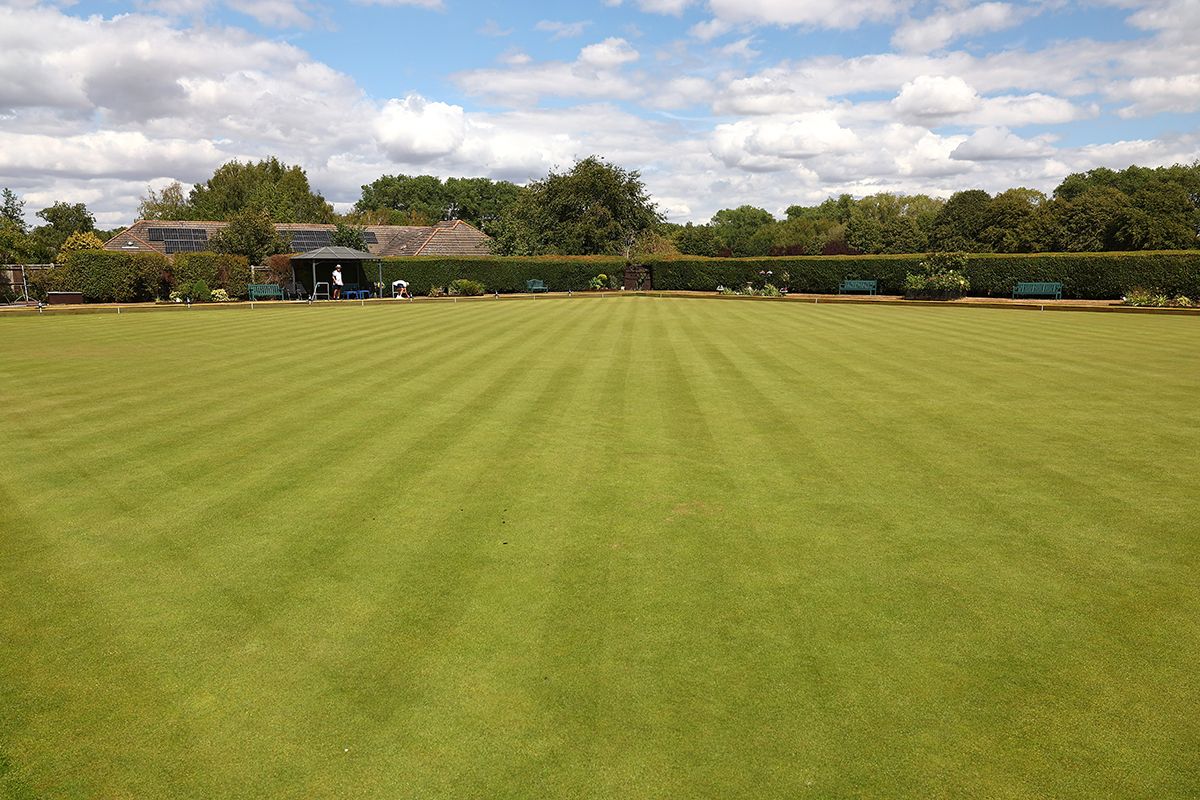
Of all the maintenance activities, Sue highlights autumn renovation as one of the most important.
Once the playing season finishes, the team can concentrate on giving the green the attention it needs to recover and prepare for the following year.
Key activities include aeration, overseeding, top dressing and feeding.
These processes help improve the condition of the turf, encourage healthy grass growth and maintain a consistent playing surface.
It is a significant amount of work, but getting these tasks right provides the foundations for a successful season ahead.
The Most Important Machine?
When asked which machine she considers the most valuable in the club's collection, Sue doesn't hesitate.
"The FT510 is, in my opinion, the most valuable machine we own."
Its versatility and ability to undertake several different tasks make it an essential piece of equipment for the team.
If budget allowed, Sue would also be interested in upgrading to the newer battery-powered Dennis ES510, which offers even greater versatility through its interchangeable cassette system.
Sue's Top Five Greenkeeping Tips
Having spent years maintaining Harperbury's green, Sue has developed some valuable advice for anyone involved in bowling green maintenance.
1. Get irrigation right
Keeping the green properly irrigated is essential, particularly during warmer weather. If you have an irrigation system, make sure it is used effectively.
2. Build a strong team
Greenkeeping is a big commitment and too much work for one person alone. Having a reliable, supportive team makes all the difference.
3. Follow a planned maintenance programme
Regular feeding, fertilising and pest management help maintain a healthy green and prevent problems from developing.
4. Use the right machinery
Having the correct equipment for each task helps achieve better results and makes maintenance more efficient.
5. Look after your machinery
Well-maintained, properly serviced equipment is essential. Keeping machinery in good condition helps ensure it is ready when you need it and supports the production of a high-quality playing surface.
A Final Word from Sue
For Sue and the Green Team at Harperbury Bowls Club, greenkeeping is about more than producing a good playing surface. It is about teamwork, community, friendship and taking pride in the club.
Their commitment throughout the year, supported by reliable machinery and a carefully planned maintenance programme, helps ensure members and visiting teams can enjoy a quality bowling experience.
Sue's story is also a reminder that volunteering opportunities are for everyone. Whether you are an experienced bowler or someone looking to become more involved with your club, greenkeeping can offer a rewarding way to contribute.
And perhaps most importantly, you don't have to be a man to do it!
A huge thank you to Sue and the entire Harperbury Green Team for sharing their experience and for the dedication that goes into keeping the green in such excellent condition.